Internship Period: February 2027
Profile: Fourth-year Mechanical, Automotive, Marine or Aerospace Engineering student
Proposal:
Vekoma and Solico propose to conduct a feasibility study on a concrete lightweighting application on an existing ride vehicle. More specifically, a certain component will be identified as a candidate for being replaced by FRP. To support this initiative, it is proposed to frame this study as dedicated internship(s).
Internship Objective:
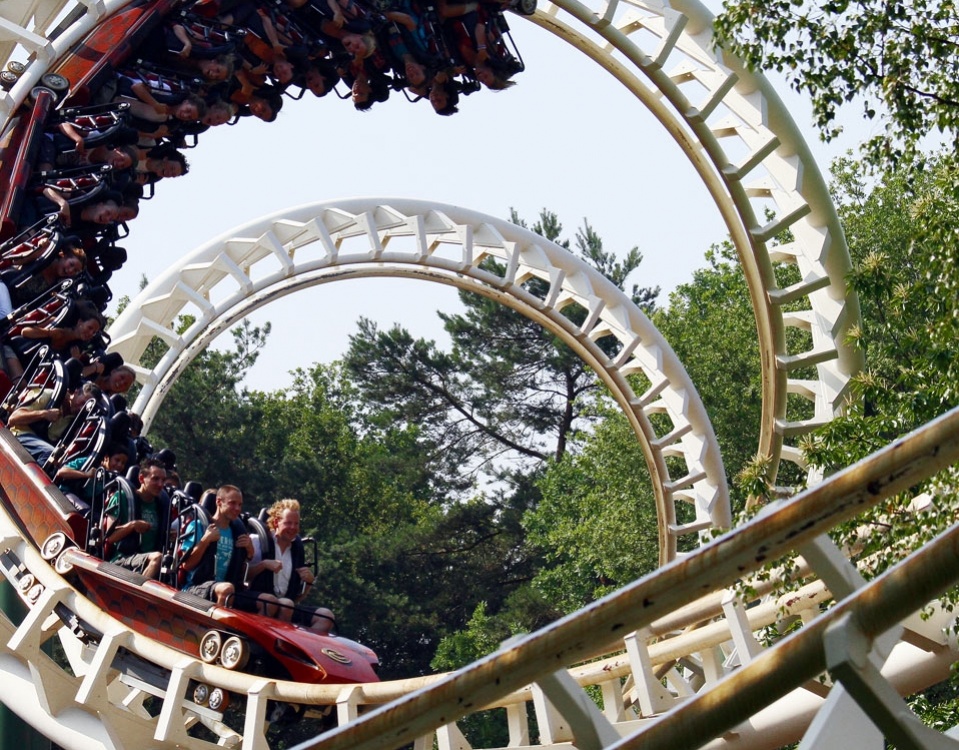
The goal of this project is to redesign a component from a rollercoaster train by using composite materials (FRP), covering design, analysis, production process, and evaluation of potential benefits. The work will offer hands-on experience in composite design, calculation, simulation, and deployment within the rollercoaster industry.
This document is covering all of the desired projects steps and may exceed the scope of an average internship. Given their expertise, the workload estimation should be determined at a later stage by Solico in accordance with Vekoma.
Necessary/preferred knowledge:
1. Required skills
- Basic knowledge of mechanics and material (preferably composites) behavior.
- Familiarity with CAD software (preferably SolidEdge).
- Understanding of and experience with FEA methodology and applications.
- Good analytical and problem-solving skills.
- Ability to work independently and in a structured manner.
- Ability to independently explore and master unfamiliar, theoretical topics.
- Experience with academic research work (e.g. working with Research Papers and norms).
- Have a critical and self-reflective attitude toward your own work and the work of others.
- Good Dutch and English communication skills (both written and spoken).
2. Preferred skills
- Experience with / profound knowledge of manufacturing processes (preferably composites).
- Familiarity with technical drawings.
- Understanding of testing and validation methods.
- Experience with Composites FEA analyses
Projects steps : Compulsory
1. Project Set-up
- Get a deep understanding of the problem and identify a plan of approach.
- Collect relevant knowledge regarding composites material behavior and optimization.
- Review and compare different norms, calculation as well as certification standards and regulations and identify suitable candidates for the application.
2. Design & Engineering
- Determine the best material candidate for the optimized design.
-
Choose between GFRP and CFRP
-
What is the decision based on? Consider mechanical properties, dynamic properties, price, manufacturability, safety, operational constraints, etc…
- Redesign the component, considering the current vehicle and material constraints.
-
What are important points of attention?
-
Why were certain decisions made? What are they based on?
- Design the component-to-vehicle interfaces.
-
What are important points of attention (e.g. galvanic corrosion)?
-
Why were certain decisions made? What are they based on?
- Perform FEA simulations, including composite-specific behavior (fiber orientation, …).
-
Which modelling / simulation techniques did you use and why?
-
How did you implement and account for the composite behavior (fiber directions, ply thickness, draping, anisotropy / orthotropy, etc.) in your FE models?
-
Why were certain decisions made?
- Select and justify appropriate standards and failure criteria.
-
Which norms and regulations did you use for the calculations, certification and evaluation of failure criteria and why?
-
Why did you choose a certain standard? How does it differ from other standards?
- Correlate simulation results with available test data.
-
Show the relation between allowable stresses used in the analyses and test data (according to your standards used).
-
Can the FE results be validated via pre-existing test data?
3. Manufacturing Definition
- Material selection (fibers, resins).
- Composite lay-up and ply-/laminate thickness.
- Manufacturing process.
- Draping allowance / Tolerances
- Propose a quality control approach.
- Create a production-ready technical drawing
4. Final Assessment
-
Safety.
- Technical feasibility.
Project steps: Desired
1. Operation & Maintenance
- Define a maintenance and repair strategy, including:
- Inspection methods (e.g. NDT).
- Damage and impact scenarios.
- Abuse scenarios
- Repair procedure (if applicable).
2. Cost & Performance evaluation
- Estimate and compare with the original design:
- Materials and production costs.
- Maintenance costs.
- Engineering hours.
- Weight.
3. Sustainability & End of Life
- Think about the End of Life handling of the Component:
- Recycling potential-
-Up- & Downcycling
- Are there more sustainable / environmentally friendly alternatives available (e.g. Natural flax fibers or bio resins)?
- Could they be used for non-load-bearing applications, like theming covers?
- Could they also be used for load bearing components?
- What are important points of attention?
Deliverables
- Approach plan of the project
- 3D-CAD model of the redesigned vehicle part
- Model and result files from FEA calculations
- Production-ready technical drawing of the redesigned vehicle part
- Report covering the entire process, including decision foundations, methodologies, results, critical discussion of the results, recommendations, etc.
Companies
Founded over 30 years ago, Solico Engineering is one of the world's largest composite engineering company, and proudly supports market leading composites manufacturers across a broad spectrum of Maritime, Defence, Civil & Architecture and Industrial markets. Always independent, and focused on smart, fit for purpose design, we commit to add value to every project we engineer.
Vekoma Rides is one of the world’s leading manufacturers of roller coasters and amusement rides. With decades of experience in ride design, engineering and manufacturing, Vekoma delivers innovative attractions to theme and amusement parks around the world, combining creativity, advanced engineering, safety and an exceptional guest experience.
** A VOG is required